
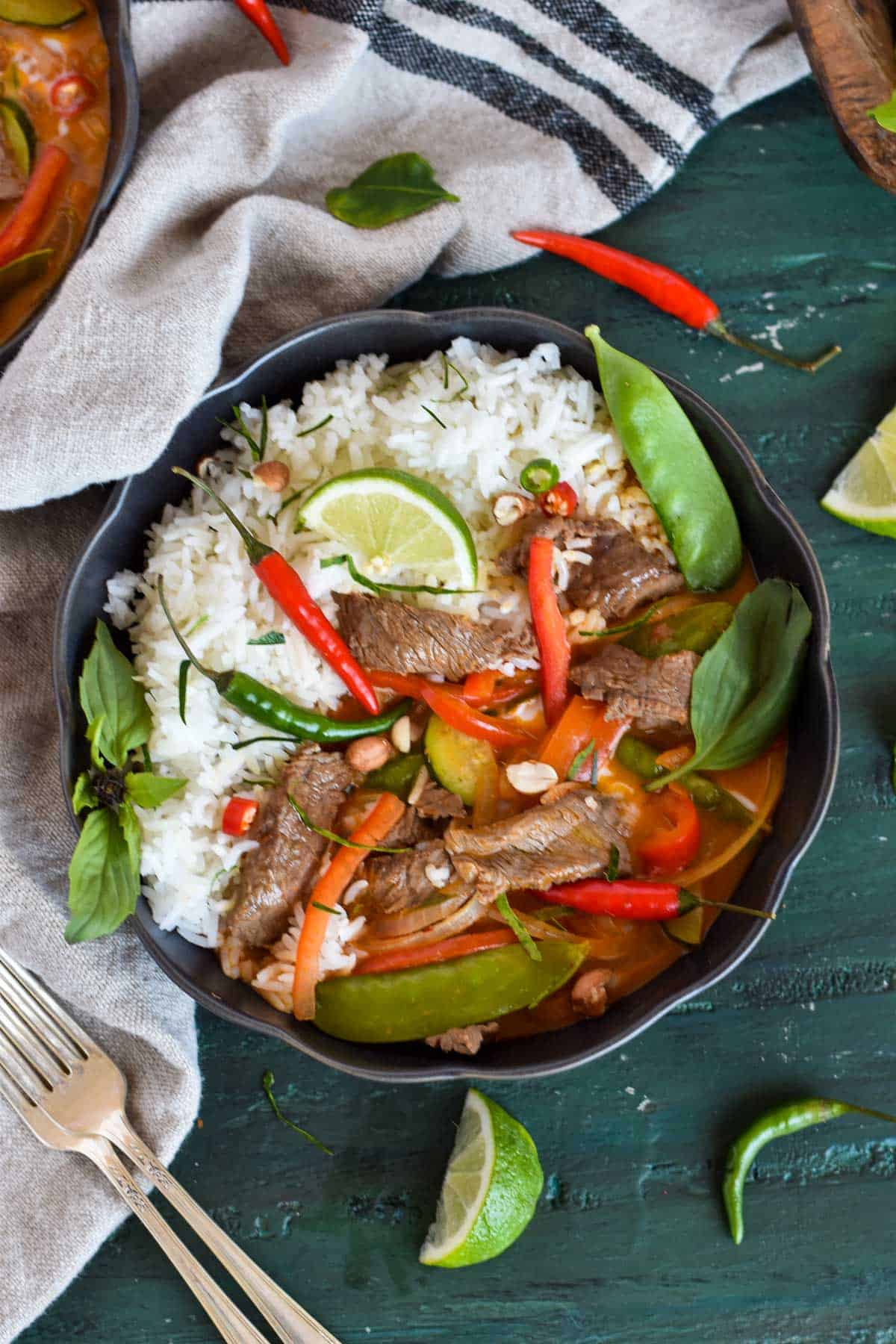
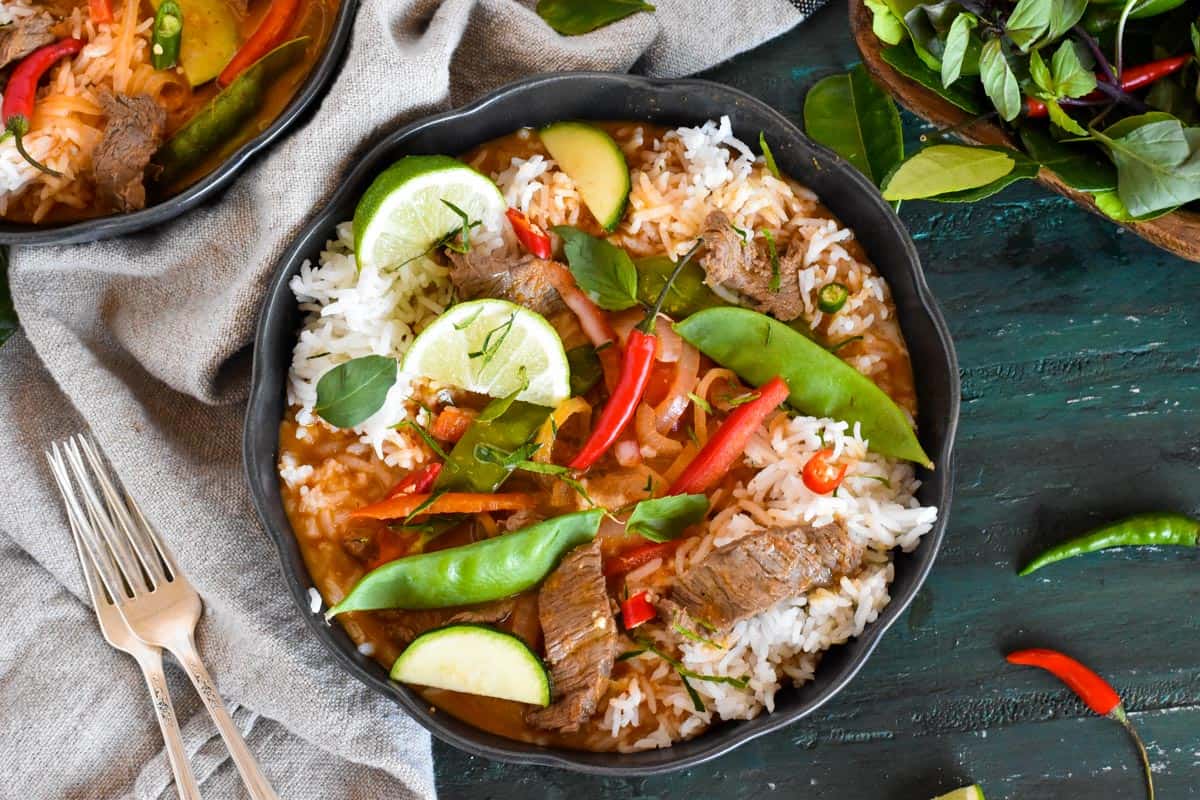
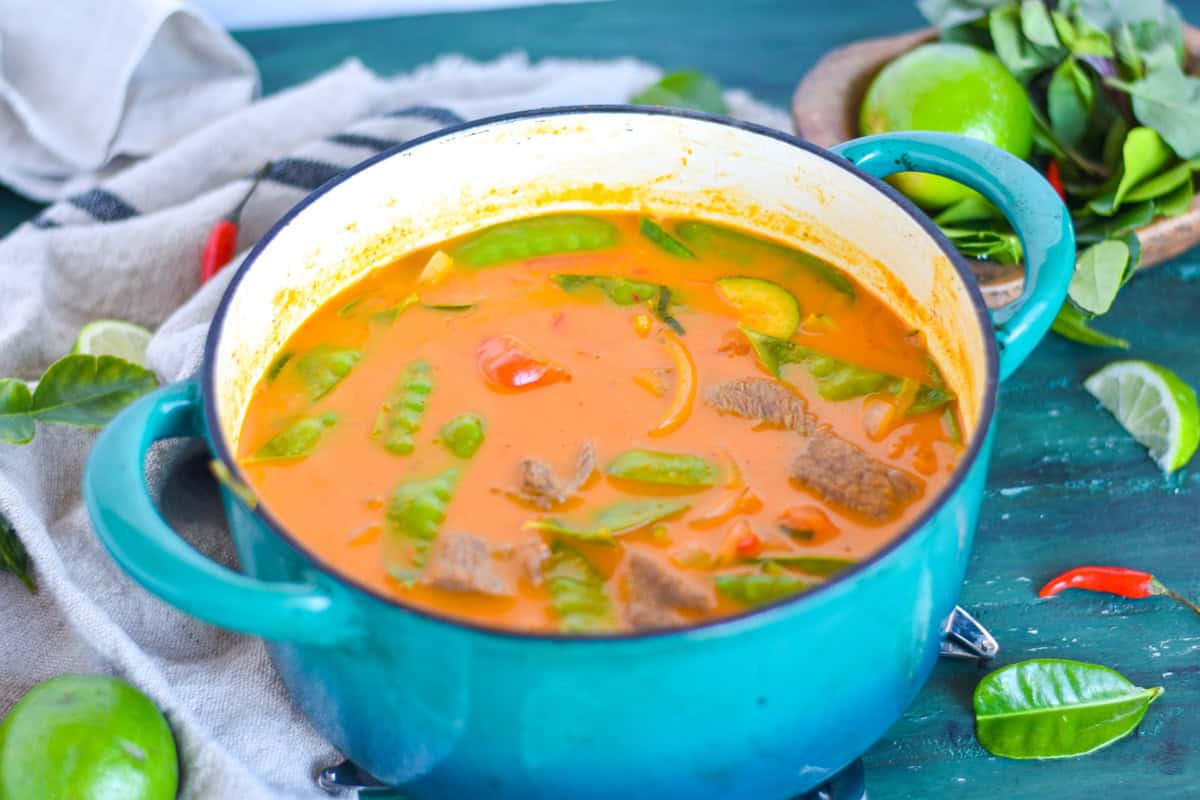
Thai beef panang curry is flavorful and classic Thai dish. It's creamy, sweet, spicy, infused with rich herbs and spices that make the flavor unique. Our recipe has thinly sliced steak and vegetables, all in a coconut curry sauce served with rice.
Jump to:
Why You'll Love this Recipe
Top Reasons You'll Love this Recipe
- Fast
- Made all in one pot
- Incredibly flavorful
Thai beef panang curry (sometimes spelled panaeng) is one of the most popular curries in Thailand. It so rich in flavors, the curry paste is made with lemongrass, galangal, kaffir lime leaves, and red chilies that make it taste incredible. The curry itself comes together quickly and is made all in one pot!
While this recipe calls for steak, we've also given instructions if you'd like to use chicken, pork, or shrimp in this recipe. We've also given slow cooker instructions if you'd like to make it in your slow cooker (crockpot).
Ingredient Notes
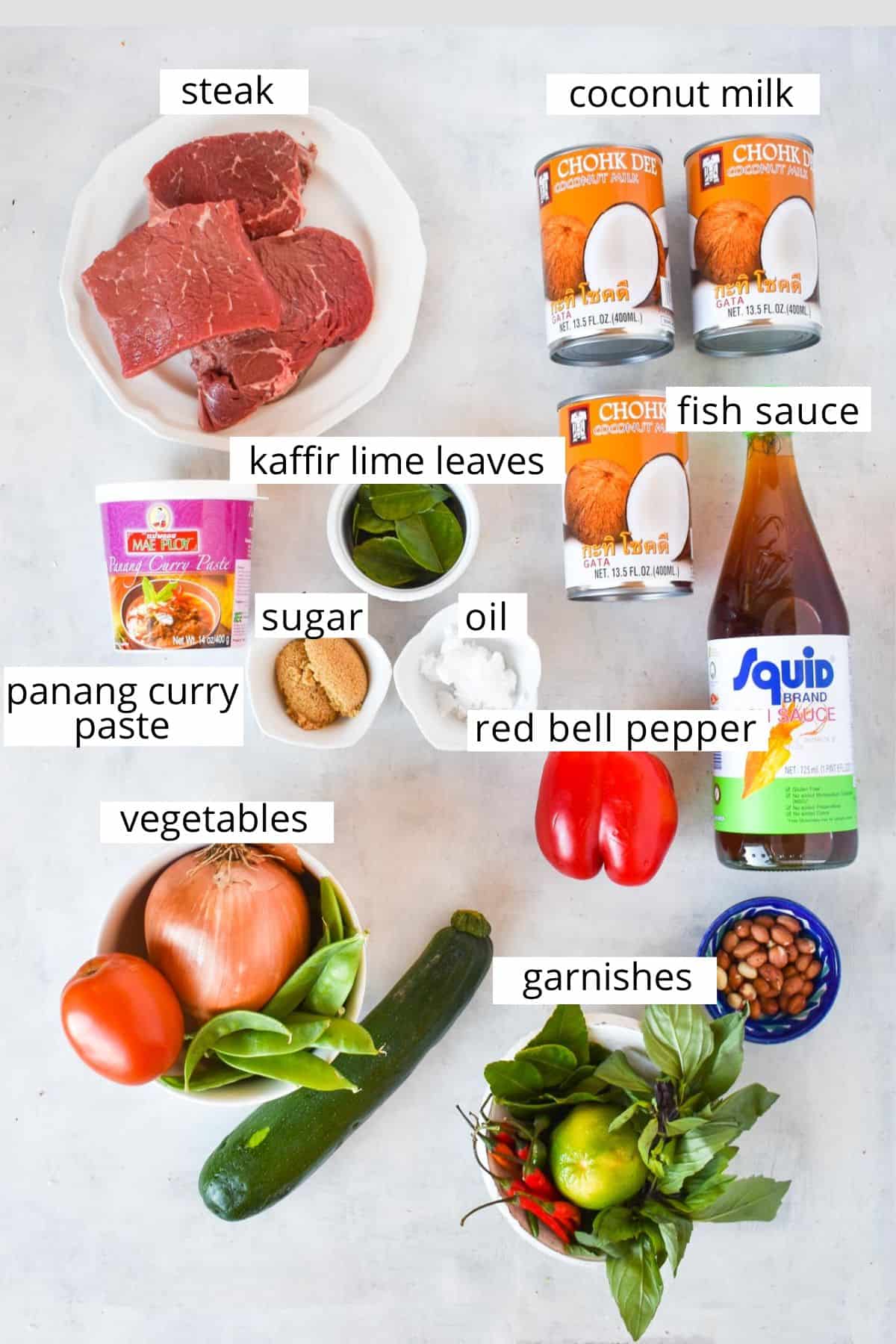
- Panang Curry Paste. Good quality panang curry paste is crucial for the base of this beef panang curry recipe. My favorite brands are Maeploy and Aroy D. I typically get these at my local Asian market, they are also available online.
- Beef. Use a good quality beef or steak. See section below on choosing the right kind of the beef.
- Oil. A little oil is needed, I usually use coconut oil, vegetable oil, or olive oil.
- Coconut Milk. Use canned coconut milk, full fat, preferably.
- Fish Sauce. Fish sauce is made of some kind of fish, water, and salt. It typically does not taste super fishy, and adds a nice salty flavor to the curry.
- Kaffir Lime Leaves. Also known as makrut lime leaves, have an intense and fragrant citrus flavor. Be sure to freeze any leftover lime leaves you have! These are fairly inexpensive in the produce section of Asian markets. Also available online, but the lime leaves cost more.
- Sugar. A little sugar adds to the sweetness of this curry, I typically use light brown sugar or coconut sugar. You could also use white sugar, palm sugar, or even honey.
- Red Bell Pepper. Red bell pepper is usually used to garnish the beef panang curry, however, I also like add the julienned (thinly sliced) pieces into the curry itself.
- Optional Vegetables. Traditional and authentic beef panang curry as it is served in Thailand does not contain vegetables. However, here in America, I've never seen any Thai restaurant not have a variety of vegetables in panang curry. Adding in vegetables is optional, here are some of my favorites, depending on what's in season: zucchini, snow peas, onion, tomato, and carrots.
- Garnish. This is completely optional, however I like to garnish my curry with a wedge of lime, Thai chilies Lime, thinly sliced lime leaves, Thai basil, and chopped peanuts.
Choosing the Right Kind of Beef and How to Prepare it
To ensure that you have tender beef in the beef panang curry you need to do a few things: 1) choose the right kind of meat; 2) cut it correctly; 3) prepare it.
Picking the Right Cut
When picking the cut of beef for the curry, choose something that is lean, quick cooking, and a cut you would ideally eat as a steak. I chose top sirloin for mine, other popular cuts are strip steak, or ribeye steak. A good cut of steak should ready and tender in the beef panang curry within a few minutes.
If you choose a tougher cut of meat that is not ideal, you can braise the meat by cooking the curry on a low temperature for a long period of time until the meat is tender, and falling apart. Depending on the cut this can take, this can take anywhere from 45 minutes to several hours.
Cut & Prepare it Correctly
Before adding the meat to the curry, you'll want to thinly slice it against the grain. Cutting the meat against the grains shortens the muscle fibers making them easier to chew and feel more tender. The thinner the slice of meat, the easier it is to tenderize in the curry.
Usually, before you cook steak, you salt it. The salt also tenderizes the meat. For this recipe, we massage the meat with a little fish sauce, which contains a good amount of salt.
Ensure tender beef-choose a cut of beef you would eat as a steak.
How to Make this Recipe
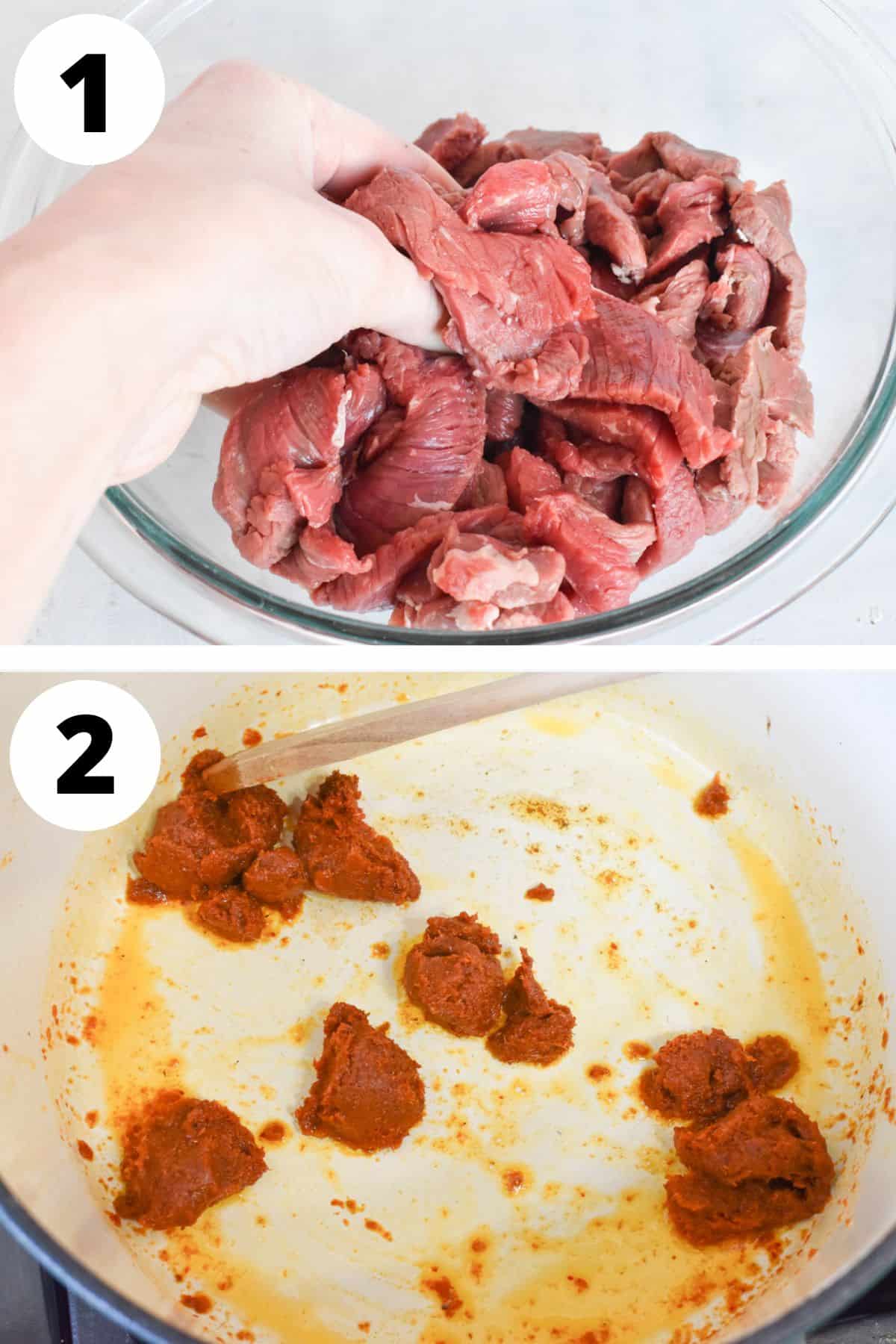
- Prep Beef. Thinly slice the beef against the grain. Then massage 2 teaspoons of fish sauce into the beef. Set aside.
- Fry Curry Paste. Heat your oil in a large pot, then add your curry paste. Fry the curry paste until fragrant.
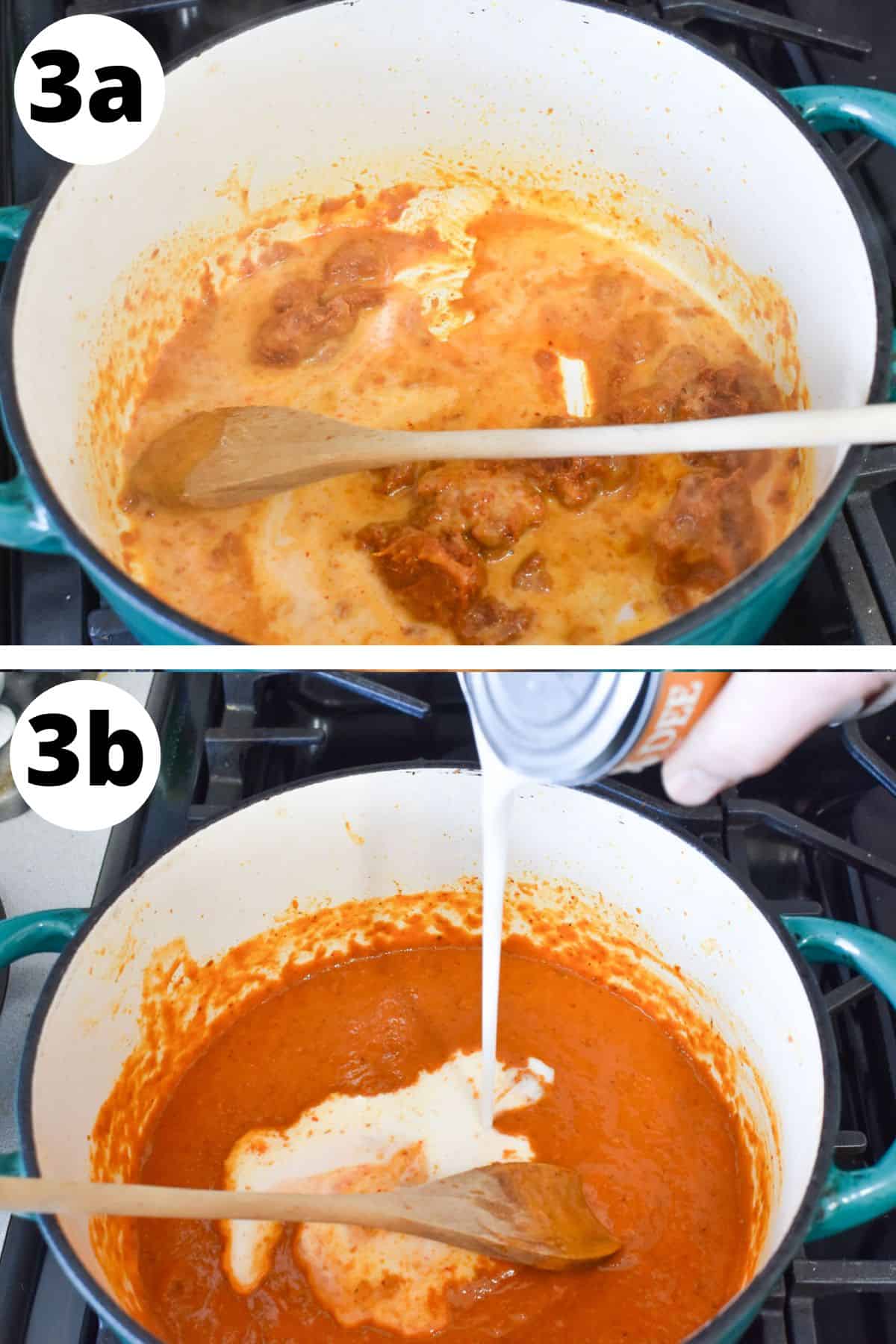
- Add Coconut Milk. Add a little coconut milk, mix with the curry paste until completely dissolved and there are not lumps. Pour in the remaining coconut milk.
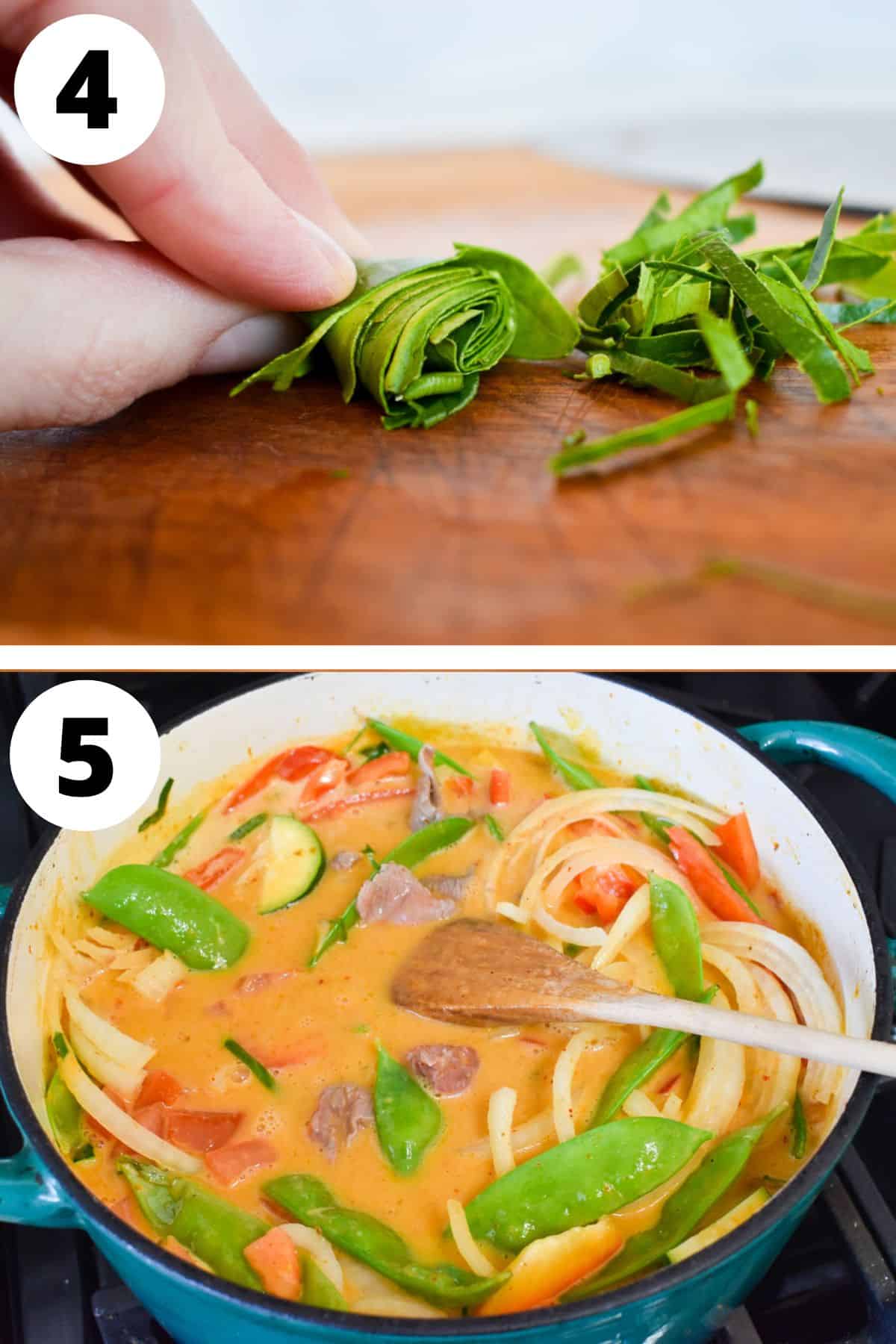
- Slice Lime Leaves. Stack the lime leaves together, roll them up, and thinly slice them with a sharp knife.
- Stir in ingredients. Add in the lime leaves, sugar, and fish sauce, bring to a simmer. Add in the beef, sliced red pepper, and any vegetables. Simmer for 10 minutes.
- Garnish & Serve. Serve with rice and garnish, if desired, with thinly sliced lime leaves, chopped peanuts, Thai chilies, Thai basil, and a wedge of lime.
How to Make Beef Panang Curry in the Slow Cooker
You can absolutely make this beef panang curry in a slow cooker (crockpot). Whisk together the panang curry paste with a little bit of coconut milk until it's smooth. Then add a little more, whisking it together, until a full can of coconut milk is added.
Pour the curry paste + coconut milk, into the slow cooker, add in the rest of the coconut milk, sugar, fish sauce, and kaffir lime leaves. Add the sliced steak, make sure the liquid is covering the meat completely.
Cook on LOW for about 4-6 hours. Add the vegetables in during the last 30-60 minutes of cooking. The meat and vegetables should be tender. Serve with rice.

Frequently Asked Questions (FAQs)
Beef and Pork are the most traditional meats found in Panang curry in Thailand. However, in the United States, it is very common to see chicken, tofu, or even shrimp in the panang curry.
While the two may look similar, the two curries are distinct. Both typically contain shallot, shrimp paste, garlic, red chilies, lemon grass, galangal, and kaffir lime peel. However, the ratios are different. Some panang curry pastes contain ground peanuts, however, I've noticed most of the panang curry pastes at my local Asian markets actually do not contain peanuts.
Panang curry tends to be more flavorful, and has a milder and sweeter flavor than red curry.
Panang curry is thick, creamy curry, made with coconut milk. The paste base is made if red chilies, and has herbs like lemongrass, galangal (part of the ginger family), kaffir lime leaves, garlic, and sometimes coriander (cilantro). The curry itself is sweet, fresh and tangy, with a little bit of heat.
Yes, you can absolutely swap out the beef for chicken, pork, or even shrimp.
If using chicken, make sure it is deboned, and thinly sliced. I usually use chicken tenderloins or chicken breasts. However, thigh meat will also work just fine.
For pork, I recommend using pork tenderloin. Slice it thinly against the grain. For the pork, you have to be careful not to overcook it, overcooking it can result in tough, chewy pork.
Cook the pork until it is about halfway done, then turn off the heat-the residual heat of the will finish cooking the pork.
For shrimp, make sure they are deveined and tails removed. Add it in with the vegetables, they will be fully cooked in about 5 minutes.
Customize Your Curry
This panang curry is easy to adjust to your personal preferences.
- Make it Milder. To make it milder you can do a few things, you can use less curry paste, add extra coconut milk, and/or add a little extra sugar. Start with one, and adjust as needed.
- Make it Saltier. If your curry needs a little more salt, you can extra fish sauce, or of course, salt.
- Make it spicier. To make it spicier you can add sliced Thai chilies-be sure to wear gloves when handling them! Or try adding some crushed red pepper.
- Make it tangier. Add a little fresh lime juice to give make your currier a little tangier.
Substitutions in this Recipe
- Red curry paste. Panang curry paste is widely available for sale online and at Asian markets. However, in a pinch, if you are unable to find panang curry paste, you can try substituting red curry paste. The flavor profile is similar, but not quite the same.
- Lime leaves. I have always been able to find kaffir lime leaves (sometimes called makrut lime leaves) at my local Asian markets. However, if you are unable to find them, the best substitutions are fresh lime zest, dried lemon grass, and/or some chopped cilantro.
- Using light coconut milk. Light coconut milk tends to be watery and lacks the creaminess needed for this recipe. If You'd like to use light coconut milk, I recommend only using 1 can of light coconut milk and 2 cans of full fat coconut milk.
- Make it Low Carb. The panang curry itself is already naturally low in carbs. Replace the sugar in the recipe with your favorite low carb sweetener, mine is monk fruit, and serve it with steamed riced cauliflower. Then this recipe is low carb and keto-friendly!
How to Store this Recipe
This Thai beef panang curry should be stored in an airtight container in the refrigerator. it is best eaten within 5 days of making it.
Can I freeze panang curry?
Yes! Cool the curry in the refrigerator completely before freezing. It can be frozen in individual portions with rice or pour into an airtight container or a freezer bag. Use within 3 months of freezing.
When you're ready to eat the curry, thaw it in the refrigerator. The individual portions can be reheated in the microwave. If heating a larger amount, pour it into a saucepan or slow cooker and heat on low. Serve with rice.

P.S. If you tried this recipe or any other In Fine Taste recipe take a second and rate it below! We love hearing what you think. Let's stay in touch! Sign up for our newsletter or follow us on Facebook, Instagram, TikTok, Youtube or Pinterest for more recipe ideas.

Thai Beef Panang Curry
Ingredients
- 4-5 tablespoons panang curry paste
- 1 tablespoon oil
- 3 13.5 ounce cans of unsweetened coconut milk (4.5 cups of coconut milk)
- 2 tablespoons brown sugar or coconut sugar
- 3 tablespoons fish sauce (divided)
- 6 Kaffir lime lives thinly sliced
- 1.5 pounds steak thinly sliced against the grain
- 1 red bell pepper sliced thinly
Optional Vegetables to add in
- 1 zucchini cut into half moons
- 1-2 cups snow peas
- 2 tomatoes diced into large chunks
- ½ medium yellow onion sliced thinly
- 1-2 cups mushrooms sliced
Garnish (optional, you don't have to use all of these, use what you have/want)
- Kaffir lime leaves thinly sliced
- Wedge of lime
- Chopped peanuts
- Thai basil
- Thai chilies
- Cilantro
Instructions
- Note: Vegetables are not traditional in panang curry in Thailand, however they are often added into panang curry in the United States. Add them if you like, or leave them out. You don't have to add in all of the vegetables listed, feel free to pick and choose which ones you like.
- Thinly slice the steak against the grain.Massage the steak with 2 teaspoons of fish sauce, then set aside.
- In a large saucepan, over medium heat, fry the curry paste in the oil. The curry paste should become very fragrant.
- Add in a little coconut milk, dissolving the curry paste in coconut milk until there are no lumps of curry paste left, Add the rest of the coconut milk and bring to a boil.
- Stir in brown sugar, fish sauce, and lime leaves, bring to a simmer. Add in beef, red bell pepper, and any vegetables you desire(optional). Simmer for 10 minutes, the steak should be cooked and tender.
- Serve with rice and garnish, if desired
Notes
Nutrition
originally posted September 19, 2018




Diana says
Just made this for my family and in-laws. It was a hit! It was easy to make and tastes great. I used 4 tablespoons of the curry paste and it had just the right kick. I don’t like super spicy foods, so it was perfect for me. I might use a little less next time, but everyone else said it was the perfect heat. I ordered the kefir leaves on Amazon and they were dried. Still worked tho! I just had to warn everyone to take them out because they were quite hard. Loved all the veggies in it too. Thanks for sharing this great recipe!
Jamie says
So much wonderful flavor in this dish and love how versatile this recipe is!
admin says
Thank you so much! It's definitely a family favorite and I love how easy it is to adapt for different people's tastes and dietary restrictions!